
The Problem with Honey Bees in Buildings
Initially having honey bees in buildings may not appear to be a problem, over time the consequences will likely become more evident, and the difficulties in having them removed and therefore cost will increase.
If you have just discovered bees in your property and are not sure what you are dealing with, see our bee nest removal page for identification and next steps.
5 points to consider about honey bees in buildings
When deciding on the best course of action for honey bees in buildings i.e to leave or to remove the honey bees, one should take into consideration the following
What ever the circumstances of the bees in your property we have a suitable solution and methodology for their removal & relocation.
Stings from honey bees in buildings
The consequences of being stung by a honey bee can be just as bad as those of a wasp sting, and the temperament of a honey bee colony can change from being uninterested to persistently nasty at any time there is a change in the Queen.
Temperament of Honey bees in buildings
Weather can have an adverse effect on a bee colonies temperament, causing them to be a lot touchier than they may normally be, so increasing the risk of being stung, this is especially relevant to businesses with Honey Bees in Buildings.
Many people have the misguided belief that honey bees are harmless, and that because they die after stinging they will cause no harm if left undisturbed. Unfortunately this simply is not realistic. Anyone that has come across a bothersome honey bee that just persists in buzzing you, will know exactly what I’m talking about – these bees can make an area uncomfortable to be in or to pass through.
Having honey bees in buildings especially if its near an outdoor garden area for a home or office can make the area a no go zone.
Worst still if at a busy work place, it can make things dangerous especially to those involved in moving cumbersome or heavy loads about. Having to worry about being stung by a honey bee should not be necessary (any don’t forget any sting after the first can cause an anaphylactic shock).
Honey Bees in Commercial, Public & Civic Buildings
Health and safety laws require that a safe environment be provide at business premises for everyone, including employees, guests, visitors and anyone else that can gain access. In the case of honey bee infestations this responsibility probably extends beyond the premises boundary, though for what distance would be difficult to assess and probably a matter for the Courts should it arise.
Honey bees can pose a severe risk to anyone needing to pass within the proximity of a honey bee colonies entrance, so having honey bees in buildings is a threat to the heath & safety of anyone on the property, especially those that have previously had a a severe allergic reaction (anaphylaxis) and need an epinephrine autoinjector (Epi-pen) for injecting a measured dose of epinephrine (adrenaline) for the treatment of anaphylaxis.
See our Commercial & Public Sector page for details of how we work with facilities managers, estates teams and property managers.
The longer there are honey bees in buildings the greater the possibility of an incident
The queens pheromones generally guides the temperament of a honey bee colony but once a colony has been in situ for sufficient time to create a swarm (usually 2 years) or possibly before (if the queen is superseded), then the colonies temperament is likely to change: rarely for the better.
The UK has imported queen honey bees from all around the world, so we now have the offspring of these queens from different races inter breeding with each other. This can result in some particularly nasty aggressive mixes – “that’s what makes our work so much fun” – but seriously this is a cause for great concern.
Having honey bees in buildings can be a real risk to safety – just run through the RAMS: that should give you sufficient indication that they are not something you should be working/living side by side with and that a course of action is required for their live removal & relocation.
In situations where we come across particularly aggressive honey bee colonies our experience (having worked with many other aggressive honey bee colonies) really helps. More importantly this experience helps us to write our RAMS properly.
Our RAMS can go a long way to removing the possibility of a nasty incident that could be so extreme that it could potentially lead to death as a result of an anaphylactic shock.
So no matter what type of organisation, if a honey bee colony has infested the property there is a responsibility to deal with it before its too late. Obviously the more people that are likely to come within proximity of the bee nest the greater the risk of harm is.
Honey Bees in Historical Heritage & Listed Properties
We are regularly found carrying out live honey bee removal & relocations at historical & heritage properties, and other listed buildings.
We fully understand the needs and requirements for working on Heritage properties and have invested in the tools & knowledge needed for doing the work safely, and technically correctly, so limiting the possibility of causing damage as a result of repetitive hammer blows, and accidental slips with a disc cutter, to both personnel and the building.
Heritage properties not only have to worry about the honey bees being a risk to public safety but also they can be the indirect cause for a Stored Product Insect infestation, resulting in damage to textiles within the property. So honey bees in buildings in these instances can be of real concern.
The dead bees offer an ideal source of nourishment for Stored Product Insects (SPI’s) and often the removal of the honey bee colony and associated detritus sees a fall in activity of these destructive SPI’s.

Honey Bees in Residential Property
We are regularly approached by property owners that have been living with honey bees in buildings quite happily for years, only to find that the bees have suddenly become bothersome and persistently aggressive, so making an outside area an unpleasant place to be, or making the short walk to the car an unpleasant event.
This can happen at any time there is a change in the Queen bee. More often than not this won’t happen in the first year after their arrival, but any time from then especially once the colony has started to produce swarms the bees temperament can change to being far more aggressive & persistent. Year on year we come across more and more customers that have been living alongside a honey bee nest in their home that find the bees temperament has suddenly changed for the worse, and that it is no longer possible to use the garden or that it has become very uncomfortable for them to get to their front door when coming home.
Secondary infestations as a result of having honey bees in buildings
If you have honey bees in buildings other things to consider are that they attract secondary pests that cause additional damage, so those clothes moth that have been munching through your wardrobe and carpets may well be a result of that very same honey bee colony.
When you come to selling your property you have a responsibility to let the potential new owner know about the bee colony, who will likely want it removed prior to a purchase agreement, so as well as having had to live with the inconvenience of the bees and the increased potential risk associated with the bees you will need to organise & pay for the removal of the bees at one of the most stressful times of your life by all accounts.
If you have Honey bees in a building then submit your details and photos via our enquiry form – no charge, no obligation.
Common questions
At first it may not look like one. Over time it becomes one: detritus builds up and draws secondary pests, honey leaks, the colony starts swarming from around two years, and its temperament changes as the queen changes. Run a risk assessment over it and stings show up as a hazard to staff and public alike, which is where a claim can come from. The longer it stays, the harder and more expensive the removal.
They can. A honey bee sting can be as bad as a wasp sting, and any sting after your first can cause anaphylaxis. A colony that has been placid for years can turn persistently aggressive at any change of queen, hot or thundery weather makes them touchier still — and a dead bee can still sting, so the risk does not end when the colony does.
The colony is removed alive in a cut-out: the structure is opened at a few key points, the bees are collected mostly by hand and the remainder with a bee vacuum, all the comb and honey is taken out, and the colony is rehomed at our apiary before the opening is reinstated and proofed.
Leaving it does not make it go away. The colony will swarm from about two years, its temperament is likely to change, honey leaks, and the dead bees and detritus feed clothes moth and carpet beetle that go on to damage textiles and carpets.
Yes. Dead bees and detritus are an ideal food source for stored product insects, clothes moth and carpet beetle — the moths in your wardrobe or carpets may well be coming from the bee colony — and removing the colony and its detritus usually sees that activity fall away.
Health and safety law requires a safe environment at business premises for employees, visitors and anyone else who can gain access, and with a bee colony that responsibility probably extends beyond the property boundary. See our Commercial & Public Sector page for how we work with facilities and estates teams.
Yes. We regularly carry out live removals at heritage and listed properties, and have invested in the tools and knowledge to do the work safely and technically correctly, limiting the risk of damage.
You will be asked. The seller’s property information form includes questions about vermin and infestations, and it is an untrue answer to those questions — rather than simply saying nothing — that creates the liability. In practice a buyer will want the colony removed before agreeing the purchase. Your conveyancer is the person to ask.
Rarely. Bees seen going under tiles are more often in a cavity wall behind the roofline, an old dismantled chimney stack left beneath the tiles, a soffit void or a dormer. Our honey bees in roof page goes through all seven places we find them.
Our honey bee relocation Specialist is waiting for you!
Swarmcatcher are the UK honey bee colony removal specialists that provide an ethical eco-friendly bee removal and relocation service across the UK.

Honey Bees in Chimney
We attend more chimney honey bee removals than we do of any other type of honey bee removal or cutout. We don’t need to dismantle the chimney, we rarely remove more than 4 individual bricks. When honey bees occupy a chimney space it is usually one of three scenarios or a combination of them.
Honey Bees in Roof
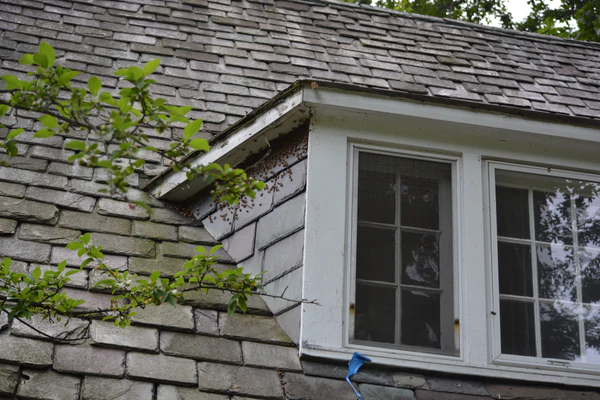
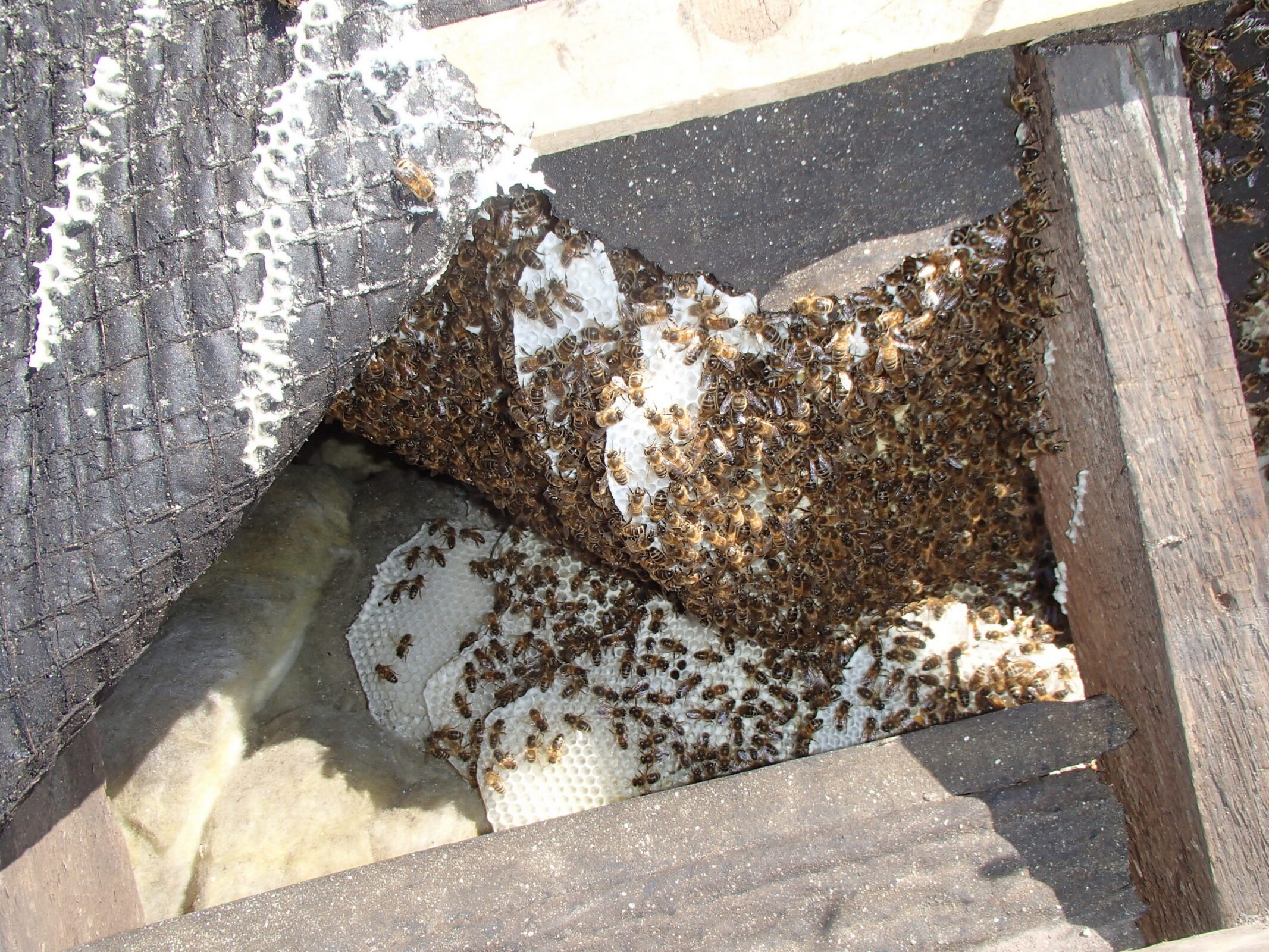
Generally speaking honey bees don’t colonise large roof spaces, when they are flying in beneath tiles they more often than not are colonising a cavity wall or an old dismantled chimney stack that is hidden beneath the tiles. But they love dormer windows and flat roofs
Honey Bees in Wall
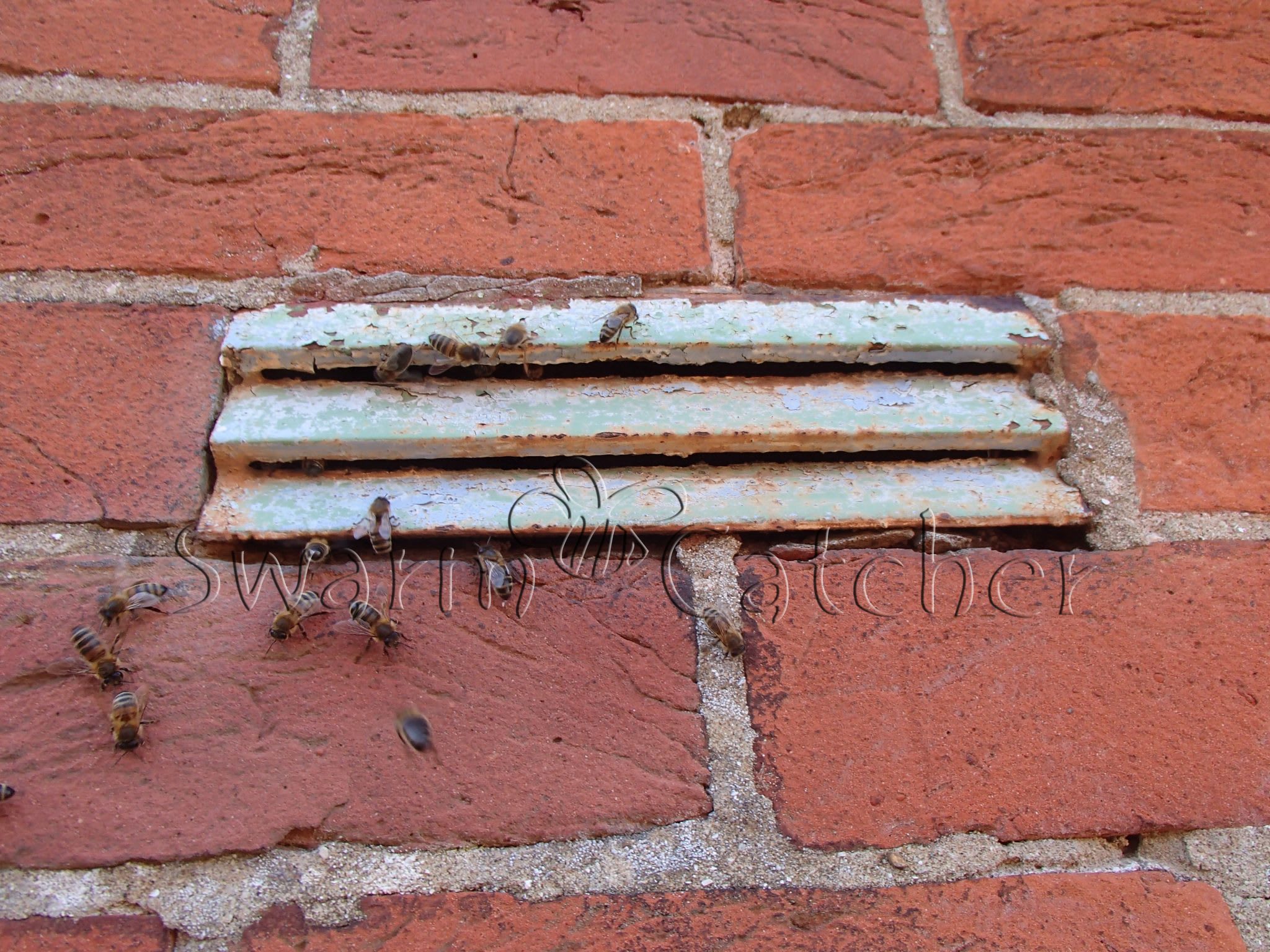
We remove bees from walls and we can do it without taking them down or knocking huge holes into them. We remove the bees the wax & the honey. Rarely do we need to remove more than 8 bricks, which we remove whole so they go back as they were.
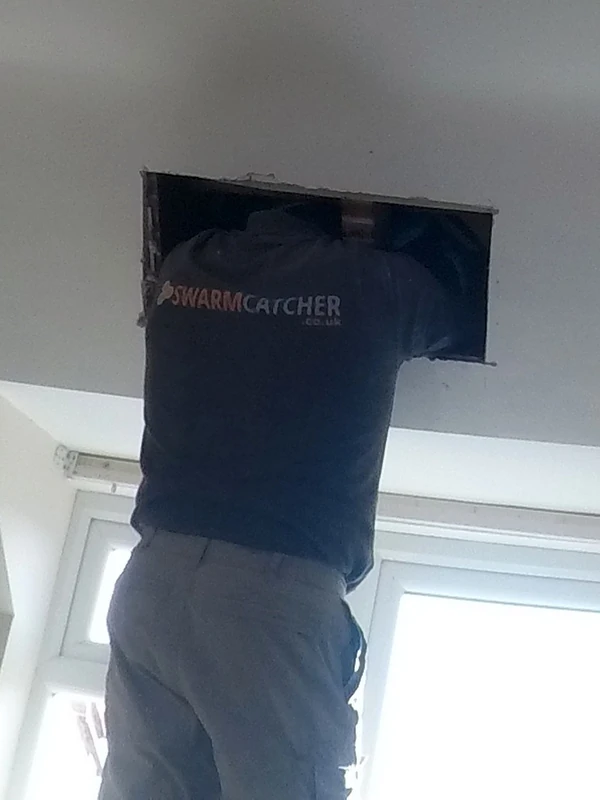
For further information on bee removal and relocation please use the contact form in the side bar or message button below.
If you are looking for information on removing bees from a chimney check out our article ‘Honey bees in chimney‘, or if you repeatedly have bee swarms take up home in your chimney you may want to look at our page ‘Why honey bees like chimneys‘ & ‘Everything you need to consider when removing bees in a chimney‘ which is a fairly extensive overview.
For information on bee removal and relocation from roofs you may want to look at our page ‘Honey bees in roof‘, or if you have honey bees in a wall our page ‘Honey bees in wall‘ maybe of use.
For examples on removals of honey bees from these and other more unusual places check thru The Hive Blog and investigate our Tag cloud too.
Don’t forget a general overview on honey bee removals which can be found at ‘Live honey bee removal’.
