
Bees in a roof are rarely in the roof space
When someone reports bees “in the roof”, the colony is rarely in the open roof space itself. More commonly, bees entering beneath tiles are occupying a cavity wall behind the roofline, an old dismantled chimney stack hidden beneath the tiles, a soffit void, or the space within a dormer structure.
True roof space colonies – where bees are building comb in an open loft – are less common than most people expect. But they do happen, and when they do the removal requires careful access to avoid unnecessary damage.
We use thermal imaging to locate the colony before starting any work. This removes guesswork and ensures we access the right void first time.
Bees coming through a light fitting
Bees coming through a light fitting are in a ceiling void or between floors, and the lights should be switched off straight away — a halogen bulb runs hotter than the temperature at which dried insect remains catch fire.
A halogen bulb only works because its quartz envelope runs extremely hot — it has to reach at least 250°C for the chemical cycle inside it to function. Dried organic matter such as dead bees begins to char from around 150°C and can ignite without any spark from about 250°C. Dead bees collecting on or inside the fitting are therefore sitting at or above their own ignition point.
Immediate action while waiting for removal:
Switch off the lights:
Old halogen bulbs run hot. Dead bees dry out and become combustible, creating a fire risk. Do not use the lights until the bees have been removed.
Tape over the fitting:
Use dark tape or card to cover gaps around the light fitting where bees are entering. This is temporary only.
Use painter’s tape or masking tape if you’re concerned about damaging the finish when removing it.
Bees entering through light fittings indicates the colony is in a ceiling void or between floors. This is a common scenario in flat roofs and dormer structures where the void provides the enclosed space bees need.
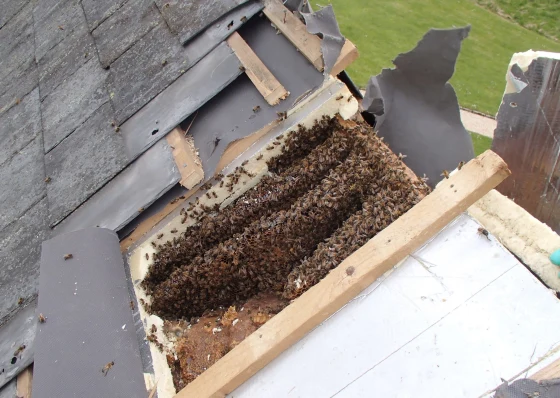


Where honey bees actually nest when they enter a roof
There are seven places we find them: a cavity wall behind the roofline, an old dismantled chimney stack left beneath the tiles, a soffit or fascia void, a dormer structure, a flat roof void, the space above a wide old stone wall, and — least often — an open loft space.
Cavity walls behind the roofline:
Bees entering beneath tiles near the eaves are often occupying the cavity wall. The roof provides shelter to the entry point but the colony is in the wall void below.
Dismantled chimney stacks:
Old chimney stacks that have been taken down to below roofline level but left in place beneath the tiles are a common nesting site. The bees enter through gaps in the tiles and occupy the void where the chimney used to be.
Soffit and fascia voids:
The void behind soffits or between fascia boards and the wall provides an enclosed space bees will readily occupy. Entry is typically through gaps where the soffit meets the wall or through ventilation slots.
Dormer structures:
Dormers create voids where the two roof planes meet. Bees entering at this junction are usually occupying the dormer roof space. This is one of the more predictable roof scenarios.
Flat roof voids:
Flat roofs with a void between the ceiling and the roof membrane – common in extensions and commercial buildings – provide ideal nesting space. Bees often occupy the space between rafters.
Above a wide stone wall:
Older buildings with thick stone walls can have a void where the wall head meets the roof structure — an enclosed space that bees will occupy, reached from beneath the tiles.
Open loft spaces:
Less common but it does happen. Bees entering through roof damage or ventilation points may build comb suspended from rafters in an open loft. This is the easiest scenario for access and removal.
How We Remove Bees From Roofs
Honey bees in a roof are removed by temporarily lifting the tiles or slates above the colony, cutting through the membrane, and taking out all the bees, comb and honey from above — the bees go to our apiary and the tiles are reinstated once the area has been scraped clean.
External access – our preferred method where practical:
We temporarily remove roof tiles or slates, cut through the membrane (which is often deteriorated in these scenarios), and remove all the bees, comb and honey stores from above. The bees are relocated to our apiary.
This is usually more straightforward for reinstatement than accessing through ceiling plasterboard. It’s also more comfortable to work from – as opposed to working inside a hot enclosed space, reaching into a hole above your head, with wet sticky honey ready to fall along with thousands of bees.
Before reinstating the tiles or slates we clean the area as much as possible, scraping off honey and wax residue.
Dormers:
For dormer structures we usually access from within the property rather than removing external roofing, to save on the cost of complex scaffolding.
Internal access – sometimes necessary:
For some roof configurations, internal access through the ceiling is more practical. This depends on the structure, the location of the colony, and what access route causes least disruption overall. Typically this includes flat roofs and dormers.
Thermal imaging:
We use thermal imaging to locate the colony before starting work. This tells us where the bees actually are, how far the colony extends, and what access route makes most sense. It removes guesswork and prevents opening the wrong void.
Access costs:
Scaffold or Mobile Aluminum Tower is quoted separately where required. Best route of access is usually identified and indicated when we get back to you with pricing.
Proofing Roofs After Removal
Specific entry points can be dealt with — dormer junctions sealed, soffit gaps meshed, damaged tiles replaced, dismantled chimney voids closed — but an entire old tiled or slated roof cannot be proofed against every possible entry without creating the ventilation problems that cause damp and timber rot.
What can realistically be proofed:
Specific entry points can be addressed – dormer junctions can be sealed, soffit gaps can be meshed or filled, damaged tiles can be replaced, dismantled chimney voids can be sealed.
What cannot practically be proofed:
An entire old tiled or slated roof cannot be proofed against all possible bee entry points. There are too many potential gaps and any attempt to seal them all would require work disproportionate to the problem and risk creating ventilation issues.
What can be done is to reduce the likelihood of reoccurrence by addressing the specific entry point used and making the space less attractive or accessible.
The ventilation issue:
Roof voids, soffits and ceiling spaces need airflow to prevent condensation and moisture buildup. Filling these voids densely with insulation material – which we see attempted – creates damp problems and can lead to wood rot.
Air vents, weep holes and air gaps exist for good reason and should not be sealed or blocked. Rather than packing a void with rockwool or similar material — which stops the space breathing and brings on damp and rot — we use an approach we describe as disruption, based on what we know about bees and how they choose a nesting space. As far as we know it has worked well for many years. Its limit is worth stating plainly: it can only be applied where we have access, which is the space the colony was in — not the neighbouring voids we cannot reach.
On guarantees:
No one can offer a genuine guarantee that bees won’t reoccupy a roof space. If someone offers one, read the small print – you’ll find get-out clauses that make it far less comprehensive than it sounds. See our Proofing & Guarantees page for full detail on why most bee removal guarantees aren’t worth having.
Pricing
What a roof removal costs depends on how long the colony has been established, the roof configuration, what access is needed, and whether the work can be done from outside or has to go through the ceiling.
Cost depends on how long the colony has been established, the roof configuration, what access is required, and whether the work can be completed from outside or requires internal access through ceilings.
We provide a cost indication once we understand your specific situation – photos, location, and details of where the bees are entering. We rarely need a site visit to provide an accurate cost indication.
Most roof removals are priced on a day rate basis. The job is typically completed within one day, though reinstatement may extend into a second day depending on the extent of proofing required.
Access costs are quoted separately when required.
Most assessments are done from your photos and description at no charge. Where a site survey is needed, its cost depends on distance, urgency and whether an overnight stay is involved, and a good percentage of it is normally offset against the work.
Common questions
Both are possible. Where practical we prefer external access – removing tiles or slates temporarily and cutting through the membrane. This is usually more straightforward for reinstatement than accessing through ceiling plasterboard. We assess each job individually.
Often they’re not in the roof space at all. When bees are seen flying beneath tiles they’re more commonly occupying a cavity wall, an old dismantled chimney stack hidden beneath the tiles, or a soffit void. We use thermal imaging to locate the colony before starting any work.
Most removals are completed within a day. Reinstatement may extend into a second day depending on the extent of access required and proofing work needed.
No one can offer a genuine guarantee that bees won’t reoccupy a roof space. Read any guarantee carefully – you’ll find get-out clauses that make it less comprehensive than it appears. See our Proofing & Guarantees page for full detail on why most bee removal guarantees aren’t worth having.
It depends on the roof construction. Some roofs are sound and provide good prevention against bee ingress. Others have multiple potential entry points – tile condition, membrane condition, dormer junctions, gable ends, soffit areas. We can address specific entry points but proofing an entire old tiled roof against all possible bee access is not practical or economical.
We recommend against filling roof voids with insulation material. These spaces need airflow to prevent condensation and moisture buildup. Blocking ventilation can cause damp and wood rot. Rather than packing a void with rockwool — which stops it breathing and brings on damp and rot — we use an approach we describe as disruption, based on what we know about how bees choose a nesting space. It can only be applied where we have access, which is the space the colony was in, not the neighbouring voids we cannot reach. We discuss options on site.
No. Air vents, weep holes and air gaps are there for good reason – usually ventilation to prevent damp. These should not be sealed or blocked. We can discuss appropriate proofing solutions that don’t compromise building ventilation.
Dormer roofs often have a space where the two roofs meet that allows easy bee access. If bees are entering this area they’re usually occupying the dormer roof space. There are effective proofing methods for dormer roof spaces once the colony is removed.
Switch off the lights immediately – old halogen bulbs run hot and dead bees become combustible. Cover gaps around the fitting with dark tape as a temporary measure. This indicates bees are in the ceiling void or between floors. See our emergency measures section above.
Learn more About Us – 20+ years specialist experience.
Our honey bee relocation Specialist is waiting for you!
Swarmcatcher are the UK honey bee colony removal specialists that provide an ethical eco-friendly bee removal and relocation service across the UK.

Honey Bees in Chimney
We attend more chimney honey bee removals than we do of any other type of honey bee removal or cutout. We don’t need to dismantle the chimney, we rarely remove more than 4 individual bricks. When honey bees occupy a chimney space it is usually one of four scenarios or a combination of them.
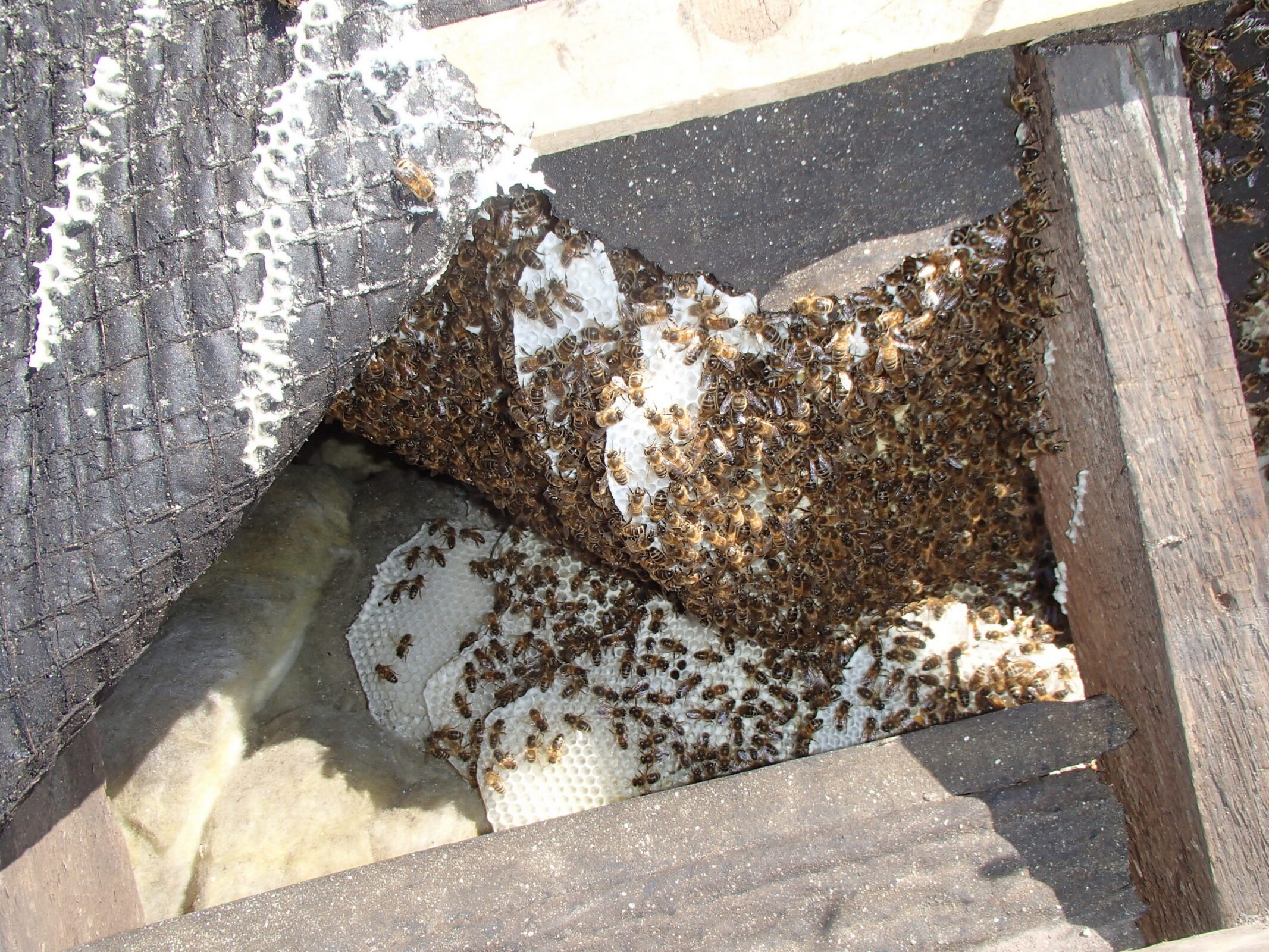
Honey Bees in Roof
Generally speaking honey bees don’t colonise large roof spaces, when they are flying in beneath tiles they more often than not are colonising a cavity wall or an old dismantled chimney stack that is hidden beneath the tiles. But they love dormer windows and flat roofs
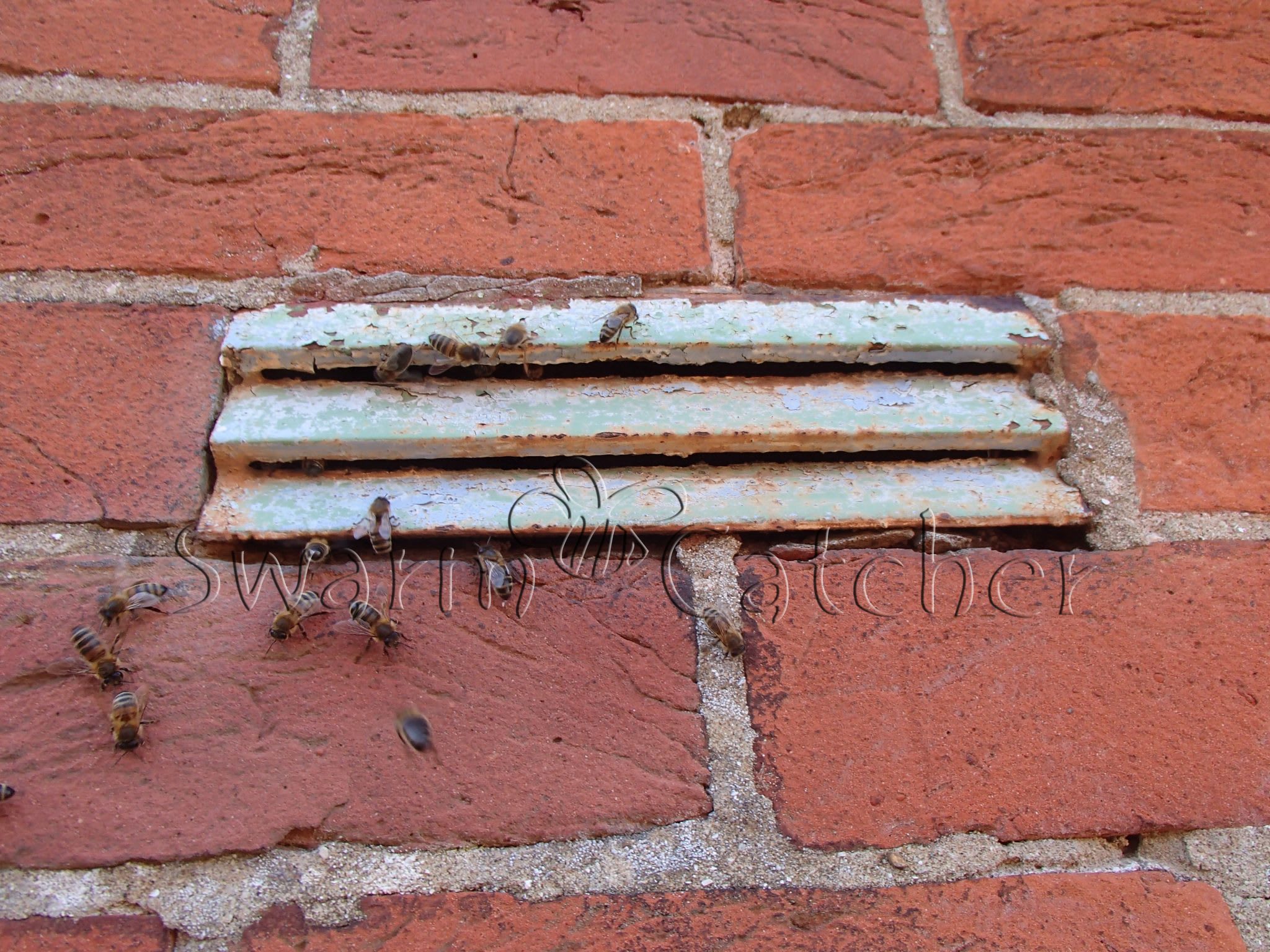
Honey Bees in Wall
We remove bees from walls and we can do it without taking them down or knocking huge holes into them. We remove the bees the wax & the honey. Rarely do we need to remove more than 8 bricks, which we remove whole so they go back as they were.
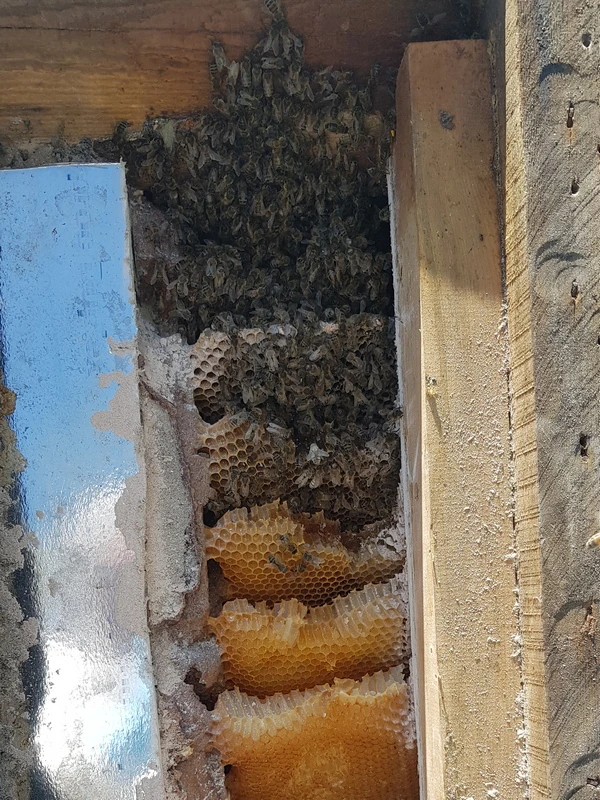
For further information on bee removal and relocation please use the contact form in the side bar or message button below, or CALL 01297 441272 to speak to someone local who knows all about it.
If you are looking for information on removing bees from a chimney check out our article ‘Honey bees in chimney‘, or if you repeatedly have bee swarms take up home in your chimney you may want to look at our page ‘Why honey bees like chimneys‘ & ‘Everything you need to consider when removing bees in a chimney‘ which is a fairly extensive overview.
For information on bee removal and relocation from roofs you may want to look at our page ‘Honey bees in roof‘, or if you have honey bees in a wall our page ‘Honey bees in wall‘ maybe of use.
For examples on removals of honey bees from these and other more unusual places check thru The Hive Blog and investigate our Tag cloud too.
Don’t forget a general overview on honey bee removals which can be found at ‘Live honey bee removal’.
